Starting a fitness journey is exciting. Most beginners feel motivated and want quick results. They often believe that exercising every day for long hours will help them reach their goals faster. I used to think the same way when I first started working out. The truth is that our bodies need time to recover after every workout. Without proper recovery, the body becomes tired, weak, and less effective.
Understanding the signs of overtraining and recovery tips for beginners can help you stay healthy, avoid injuries, and continue making progress. Fitness is not just about training hard. It is also about giving your body enough time to repair and become stronger.
In this guide, I will explain the common signs of overtraining, why recovery matters, and simple recovery tips that every beginner can follow.
What Is Overtraining?
Overtraining happens when you exercise more than your body can recover from. Every workout creates small amounts of stress on your muscles. During rest, your body repairs those muscles and makes them stronger.
If you continue training without enough rest, your body cannot fully recover. Instead of becoming stronger, you start feeling weaker. This condition is called overtraining.
Many beginners think feeling exhausted all the time means they are working hard. In reality, constant exhaustion can be a warning sign that your body needs a break.
Why Beginners Are More Likely to Overtrain
Beginners are usually very motivated. They want to lose weight, build muscle, or improve their fitness quickly. Because of this excitement, they often ignore recovery.
Some common reasons include:
- Working out every day without rest
- Doing intense workouts for long periods
- Sleeping too little
- Eating fewer calories than needed
- Not drinking enough water
- Ignoring body pain and fatigue
Learning to balance training and recovery is the key to long term success.
Common Signs of Overtraining
Recognizing the early warning signs can prevent bigger problems later.
Constant Muscle Soreness
Feeling sore for one or two days after exercise is completely normal. However, if your muscles stay sore for several days and never seem to recover, you may be overtraining.
Your muscles need enough time to repair before another intense workout.
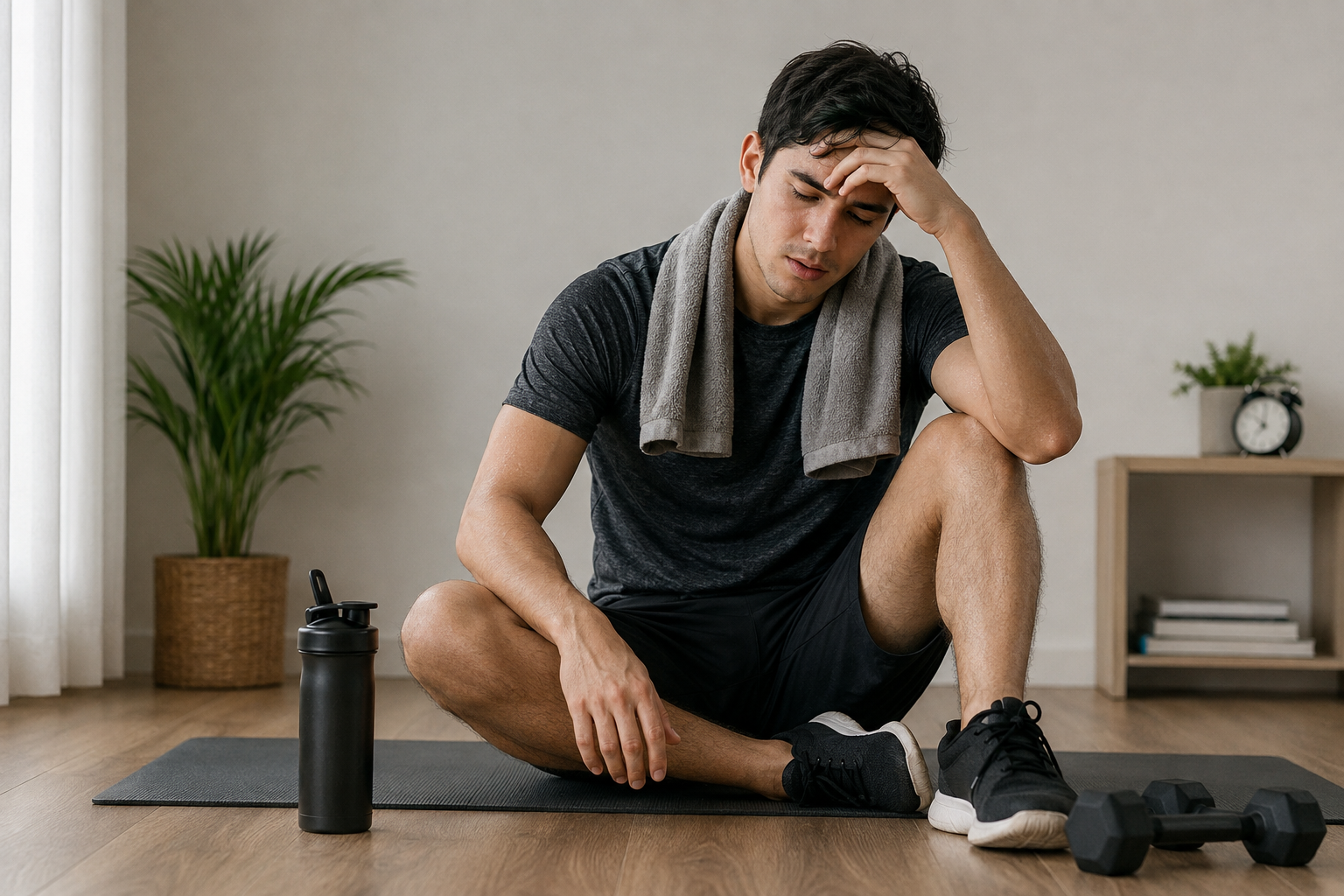
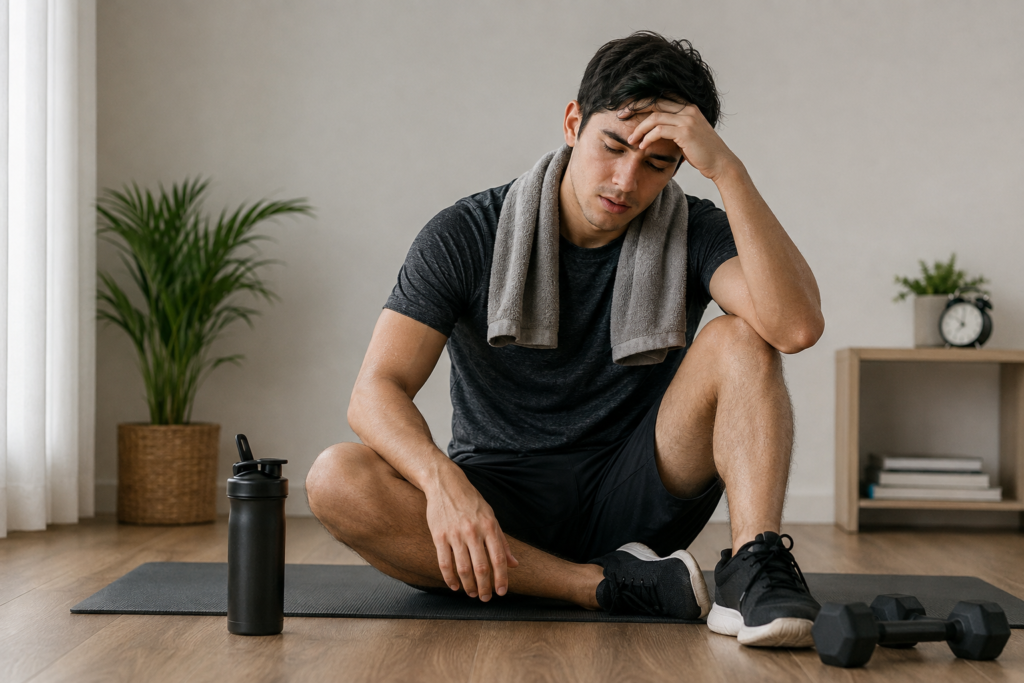
Feeling Tired All the Time
One of the biggest signs of overtraining is ongoing fatigue.
You may wake up feeling exhausted even after sleeping. Everyday activities may feel harder than usual. Instead of feeling energized after exercise, you feel drained.
Poor Workout Performance
Many people expect their performance to improve with regular exercise.
If you notice that you cannot lift the same weight, complete your normal workout, or run the same distance, your body may need recovery instead of more training.
Trouble Sleeping
Many beginners think hard workouts improve sleep.
Ironically, overtraining often causes sleep problems. You may struggle to fall asleep, wake up frequently during the night, or feel restless even after several hours in bed.
Frequent Injuries
Small aches and pains are normal sometimes.
Repeated injuries such as sore knees, shoulder pain, shin splints, or muscle strains may indicate your body is under too much stress.
Increased Resting Heart Rate
Your heart rate is usually lower when your body is healthy and recovered.
If your resting heart rate remains higher than normal for several days, it could be a sign that your body is still under stress.
Loss of Motivation
When I first experienced overtraining, I stopped enjoying my workouts.
Instead of looking forward to exercise, I started making excuses to skip sessions. Losing motivation can be an important warning sign.
Mood Changes
Overtraining affects not only the body but also the mind.
You may become more irritable, anxious, frustrated, or emotionally tired. Mood swings often appear before physical injuries.
Getting Sick More Often
Regular exercise supports the immune system.
Too much exercise without recovery weakens immunity. If you keep catching colds or feel sick frequently, overtraining may be contributing.
Loss of Appetite
Some beginners notice they lose interest in eating after excessive exercise.
Poor nutrition slows recovery even further, creating a cycle that becomes difficult to break.
Why Recovery Is So Important
Recovery is when your body actually becomes stronger.
During recovery your muscles repair damaged fibers, energy stores refill, hormones return to normal levels, and your nervous system recovers from physical stress.
Without recovery, your body cannot fully benefit from your workouts.
Think of recovery as part of your training plan rather than a break from fitness.
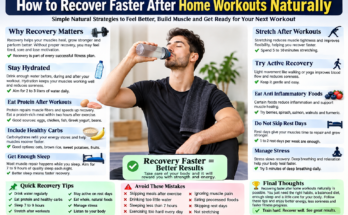
Best Recovery Tips for Beginners
Take Rest Days
Rest days are essential for muscle growth and overall recovery.
Most beginners benefit from taking one or two complete rest days each week. Rest does not mean being lazy. It means allowing your body to repair itself.
Sleep at Least Seven to Nine Hours
Quality sleep is one of the most powerful recovery tools.
During deep sleep, your body repairs muscles, releases growth hormone, and restores energy.
Try to maintain a consistent sleep schedule every night.
Eat Enough Protein
Protein supports muscle repair after exercise.
Include foods like chicken, eggs, fish, yogurt, cottage cheese, beans, lentils, and tofu in your daily meals.
Many beginners underestimate the importance of nutrition in recovery.
Stay Hydrated
Water helps transport nutrients, regulate body temperature, and support muscle function.
Drink water before, during, and after your workouts.
If you sweat heavily, increase your water intake throughout the day.
Eat Balanced Meals
Recovery requires more than protein alone.
Your meals should also include healthy carbohydrates, fruits, vegetables, and healthy fats.
Carbohydrates restore energy while vitamins and minerals support healing.
Stretch After Exercise
Gentle stretching improves flexibility and may reduce muscle tightness.
Spend five to ten minutes stretching the muscles you worked during your session.
Avoid forcing painful stretches.
Try Active Recovery
Recovery does not always mean sitting on the couch.
Light activities such as walking, cycling, yoga, or gentle swimming improve blood circulation without placing too much stress on your muscles.
These activities help reduce stiffness while promoting recovery.
Listen to Your Body
This may be the most important recovery tip.
Some days your body feels strong.
Other days it needs rest.
Learning to recognize these signals helps prevent injuries and long recovery periods.
Reduce Workout Intensity
Not every workout needs to be intense.
Mix hard training days with easier sessions.
This allows your body to recover while still staying active.
Manage Stress
Daily life stress also affects recovery.
School, work, family responsibilities, and lack of sleep all place stress on your body.
Practicing deep breathing, meditation, reading, or spending time outdoors can improve both physical and mental recovery.
How to Prevent Overtraining
Preventing overtraining is much easier than recovering from it.
Follow these simple habits:
- Increase workout intensity gradually.
- Schedule regular rest days.
- Sleep every night.
- Eat enough calories.
- Drink plenty of water.
- Warm up before exercise.
- Cool down after workouts.
- Track your progress.
- Listen to signs of fatigue.
- Avoid comparing yourself to others.
Fitness is a marathon, not a sprint.
Sample Beginner Weekly Workout Plan
A balanced weekly routine helps reduce the risk of overtraining.
Monday
Full body strength workout
Tuesday
Brisk walk or light cardio
Wednesday
Rest day
Thursday
Strength training
Friday
Light stretching and walking
Saturday
Cardio or bodyweight workout
Sunday
Complete rest
This schedule gives your muscles enough time to recover while keeping you active throughout the week.
Mistakes Beginners Should Avoid
Many new exercisers unknowingly slow their progress.
Some of the biggest mistakes include:
- Training every single day
- Skipping meals after workouts
- Sleeping less than seven hours
- Ignoring pain
- Trying advanced workouts too early
- Not drinking enough water
- Believing soreness equals progress
Avoiding these mistakes will help you stay healthy and consistent.
When Should You Take Extra Rest?
Take an additional recovery day if you experience:
- Severe muscle soreness
- Constant fatigue
- Poor sleep
- Low motivation
- Joint pain
- Dizziness during exercise
- Reduced workout performance
Resting for one day is far better than dealing with weeks of injury.
Final Thoughts
Understanding the signs of overtraining and recovery tips for beginners can make a huge difference in your fitness journey. Many beginners believe that working harder always produces better results, but that is not how the body works. Real progress happens when training and recovery are balanced.
Pay attention to your body’s signals. If you notice ongoing fatigue, poor performance, frequent soreness, or loss of motivation, it may be time to slow down and recover. Prioritize quality sleep, balanced nutrition, hydration, and regular rest days. These simple habits will help you avoid injuries, improve performance, and enjoy steady progress.
Remember that fitness is about consistency, not perfection. Train smart, recover well, and give your body the care it deserves. Over time, you will become stronger, healthier, and more confident without falling into the trap of overtraining.