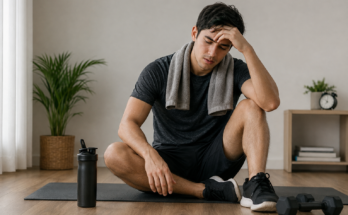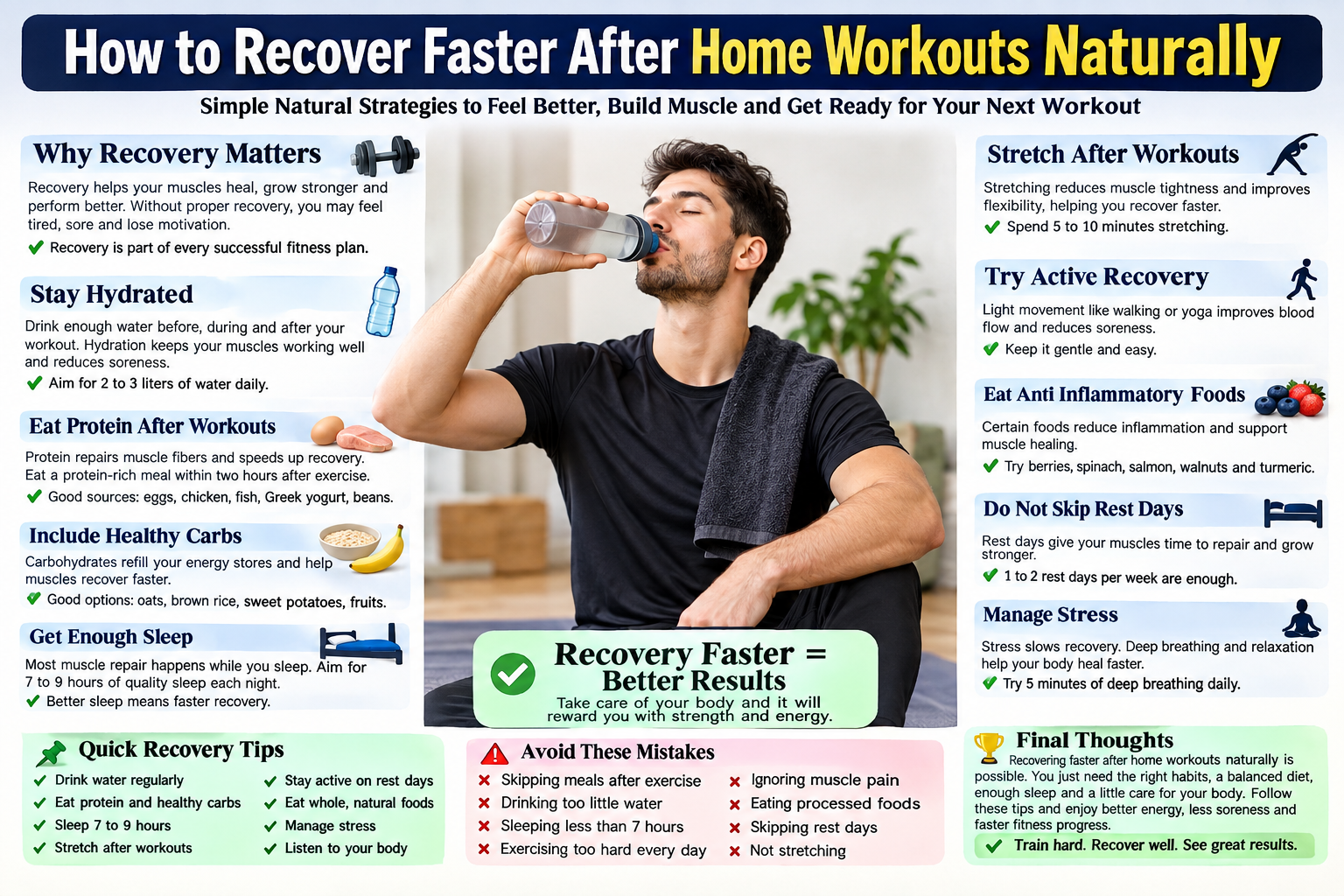
Have you ever finished a home workout and felt sore for days? It can be frustrating when your muscles stay stiff and tired, especially if you want to stay consistent with your fitness routine. The good news is that you do not need expensive supplements or fancy recovery equipment to feel better. Learning how to recover faster after home workouts naturally can help your body heal, improve your performance, and keep you motivated.
Recovery is just as important as exercise itself. Every workout creates small tears in your muscle fibers. During recovery, your body repairs these fibers, making them stronger than before. If you ignore recovery, you may feel exhausted, lose motivation, and even increase your risk of injury.
In this guide, I will explain simple and natural ways to recover faster after home workouts so you can enjoy better results without spending extra money.
Why Recovery Matters After Home Workouts
Many beginners think muscles grow only while exercising. In reality, muscles become stronger during recovery.
When you exercise at home, whether you are doing bodyweight exercises, HIIT workouts, yoga, or resistance band training, your muscles experience stress. Giving your body enough time to repair itself helps improve strength, endurance, and flexibility.
Proper recovery can help you:
- Reduce muscle soreness
- Build lean muscle faster
- Improve workout performance
- Prevent injuries
- Increase energy levels
- Stay consistent with your fitness goals
If your recovery is poor, your progress will also slow down.
Stay Hydrated Throughout the Day
One of the easiest ways to recover naturally is by drinking enough water.
During exercise, your body loses water through sweat. Even a small amount of dehydration can make your muscles feel tired and increase soreness.
Try to drink water before, during, and after your workout. If you sweat heavily, consider adding natural electrolyte sources like coconut water or homemade lemon water with a pinch of salt.
Signs you may need more water include:
- Dry mouth
- Dark yellow urine
- Headaches
- Low energy
- Muscle cramps
Proper hydration supports muscle repair and helps remove waste products from your body.
Eat Protein After Your Workout
Protein plays a major role in muscle recovery.
After finishing your home workout, your muscles need amino acids to repair damaged tissue. Eating a protein rich meal within two hours after exercise can speed up recovery naturally.
Some excellent protein sources include:
- Eggs
- Chicken breast
- Fish
- Greek yogurt
- Cottage cheese
- Lentils
- Beans
- Tofu
- Milk
If you are trying to build muscle, make sure you consume enough protein throughout the entire day instead of relying only on one meal.
Include Healthy Carbohydrates
Many people avoid carbohydrates because they fear gaining weight. However, healthy carbohydrates are essential after exercise.
Your muscles use stored glycogen as fuel during workouts. Eating healthy carbohydrates helps refill these energy stores.
Good carbohydrate options include:
- Brown rice
- Oatmeal
- Sweet potatoes
- Whole grain bread
- Fruits
- Quinoa
Combining protein and carbohydrates after your workout creates one of the best natural recovery meals.
Get Enough Sleep Every Night
If you want to know how to recover faster after home workouts naturally, improving your sleep should be your top priority.
Most muscle repair happens while you sleep. During deep sleep, your body releases growth hormone, which helps rebuild muscles and repair tissues.
Adults should aim for seven to nine hours of quality sleep every night.
To improve sleep quality:
- Go to bed at the same time every day.
- Avoid using your phone before bedtime.
- Keep your bedroom cool and quiet.
- Limit caffeine in the evening.
Better sleep leads to faster recovery and improved workout performance.
Stretch After Every Workout
Stretching helps reduce muscle tightness and improves flexibility.
Spend five to ten minutes stretching the muscles you worked during your exercise session.
Focus on slow and controlled movements without bouncing.
Some useful stretches include:
- Hamstring stretch
- Quad stretch
- Chest stretch
- Shoulder stretch
- Hip flexor stretch
- Calf stretch
Stretching increases blood flow, which helps deliver nutrients to recovering muscles.
Try Active Recovery
Recovery does not always mean sitting on the couch all day.
Light movement can actually reduce soreness by improving circulation.
Examples of active recovery include:
- Walking
- Light cycling
- Easy yoga
- Gentle stretching
- Slow swimming
On your rest days, even twenty to thirty minutes of light activity can help your muscles recover more efficiently.
Eat Anti Inflammatory Foods
Your daily diet has a huge impact on muscle recovery.
Certain foods naturally reduce inflammation and support healing.
Include more of these foods in your meals:
- Blueberries
- Strawberries
- Cherries
- Spinach
- Broccoli
- Salmon
- Walnuts
- Almonds
- Olive oil
- Turmeric
- Ginger
These foods provide antioxidants that help your body recover from exercise.
Do Not Skip Rest Days
Many people believe working out every day will produce faster results.
Actually, muscles need time to recover.
Taking one or two rest days each week allows your muscles to repair and become stronger.
Without enough rest, you may experience:
- Constant soreness
- Poor performance
- Fatigue
- Increased injury risk
- Lack of motivation
Rest days are part of every successful fitness plan.
Practice Deep Breathing
Stress can slow your body’s recovery process.
Deep breathing helps relax your nervous system and reduce stress hormones.
Try this simple breathing exercise:
- Inhale slowly through your nose for four seconds.
- Hold your breath for four seconds.
- Exhale slowly through your mouth for six seconds.
- Repeat for five minutes.
This simple habit can improve relaxation and support muscle recovery naturally.
Massage Your Muscles
Massage helps improve blood circulation and reduce muscle tightness.
You do not need a professional massage every week.
Simple options include:
- Foam rolling
- Massage balls
- Gentle self massage
- Massage gun if available
Spend a few minutes focusing on sore muscles after your workout or before bed.
Listen to Your Body
Everyone recovers differently.
Some days you may feel energetic, while other days your body may need extra rest.
Pay attention to warning signs such as:
- Extreme fatigue
- Sharp pain
- Poor sleep
- Loss of motivation
- Constant soreness
If your body needs more recovery time, do not feel guilty about taking an extra rest day.
Avoid Overtraining
Overtraining happens when you exercise too much without allowing enough recovery.
Common symptoms include:
- Muscle pain lasting several days
- Low energy
- Poor performance
- Trouble sleeping
- Mood changes
- Frequent injuries
Following a balanced workout schedule with planned recovery days is much healthier than exercising every single day.
Natural Recovery Drinks
You do not need expensive sports drinks.
Some healthy recovery drinks include:
- Plain water
- Coconut water
- Low fat milk
- Homemade fruit smoothies
- Banana and milk shake without added sugar
These drinks provide hydration along with important nutrients for muscle recovery.
Best Foods for Natural Muscle Recovery
Adding recovery friendly foods to your diet makes a noticeable difference.
Some of the best options include:
| Food | Main Benefit |
|---|---|
| Eggs | High quality protein |
| Chicken | Lean protein |
| Greek yogurt | Protein and calcium |
| Bananas | Potassium and carbohydrates |
| Sweet potatoes | Glycogen replenishment |
| Salmon | Omega 3 fats |
| Spinach | Vitamins and minerals |
| Oats | Slow digesting carbohydrates |
| Almonds | Healthy fats |
| Berries | Antioxidants |
Eating a balanced diet supports faster recovery after home workouts naturally.
Common Recovery Mistakes
Many beginners unknowingly slow their recovery.
Avoid these common mistakes:
- Skipping meals after exercise
- Drinking very little water
- Sleeping less than seven hours
- Exercising intensely every day
- Ignoring muscle pain
- Eating mostly processed foods
- Avoiding rest days
- Not stretching after workouts
Fixing these simple habits can greatly improve your recovery.
Sample Daily Recovery Routine
Here is a simple routine you can follow after your home workout.
Immediately After Exercise
Drink water and spend five to ten minutes stretching.
Within One Hour
Eat a meal containing protein and healthy carbohydrates.
Afternoon
Stay hydrated and take a short walk if your muscles feel stiff.
Evening
Eat a balanced dinner with vegetables, lean protein, and healthy fats.
Before Bed
Practice deep breathing, avoid screens, and aim for at least seven to nine hours of sleep.
Following this routine consistently will help your muscles recover more efficiently.
Frequently Asked Questions
How long does muscle recovery take after home workouts?
Most people recover within 24 to 72 hours depending on workout intensity, nutrition, sleep, and fitness level.
Is muscle soreness a sign of a good workout?
Not always. Mild soreness is normal, but extreme soreness does not necessarily mean you had a better workout.
Can I work out when I am sore?
If soreness is mild, light exercise or active recovery is usually fine. If soreness is severe or painful, take a rest day.
What is the best natural way to recover faster?
The best combination includes quality sleep, proper hydration, balanced nutrition, stretching, and planned rest days.
Do I need supplements for recovery?
No. Most people can recover well through a healthy diet, enough protein, hydration, and good sleep.
Conclusion
Knowing how to recover faster after home workouts naturally can make a big difference in your fitness journey. Recovery is not about doing less. It is about giving your body the support it needs to become stronger after every workout.
Focus on drinking enough water, eating protein and healthy carbohydrates, sleeping well, stretching regularly, staying active on rest days, and eating nutritious whole foods. These simple habits will reduce soreness, improve energy, and help you stay consistent with your home workouts.
Remember that fitness is not only about how hard you train. It is also about how well you recover. When you make recovery a priority, you will feel stronger, healthier, and ready for your next workout.