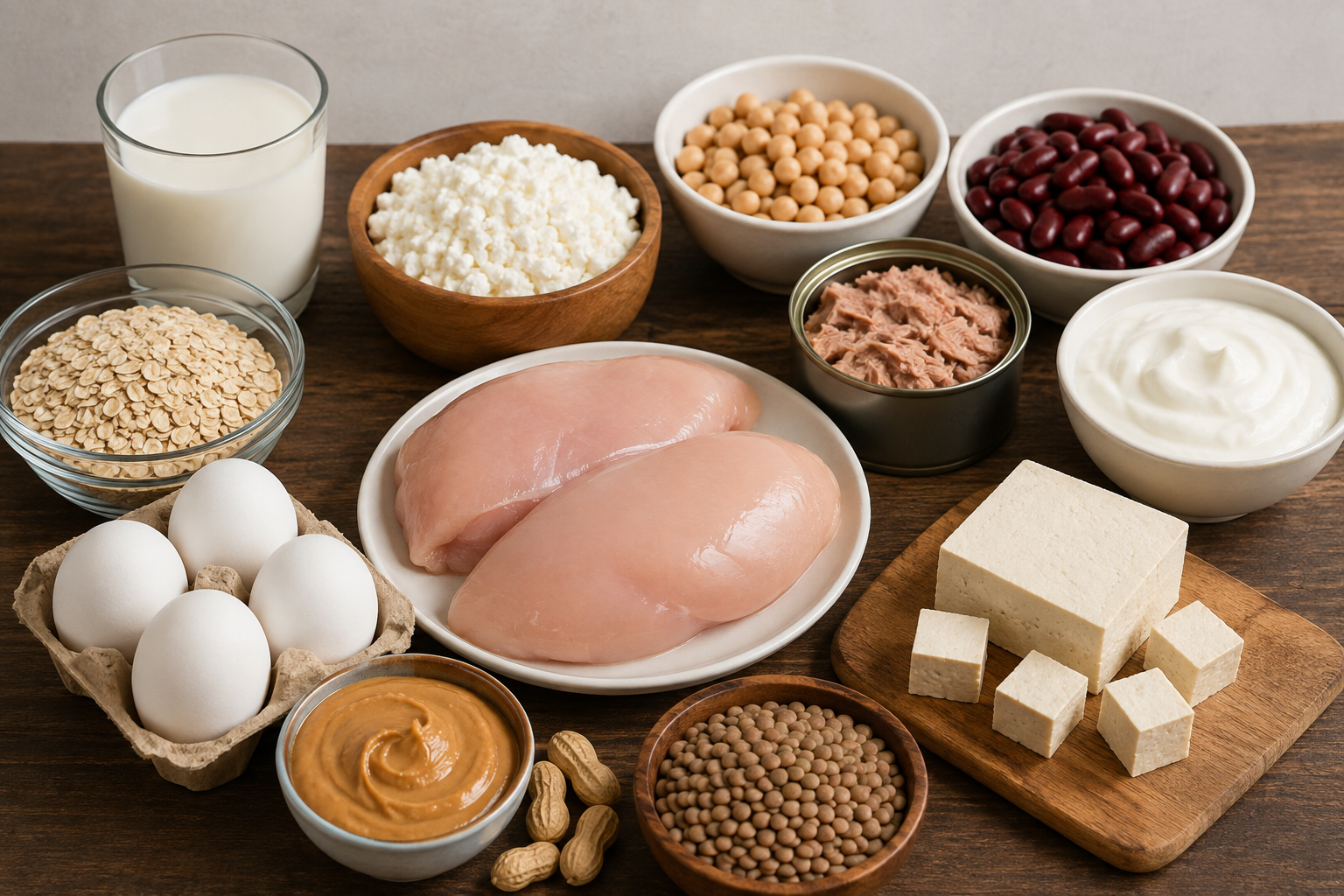
Building muscle does not have to cost a fortune. One of the biggest myths in fitness is that you need expensive supplements, premium protein powders, and costly meal plans to see real results. The truth is that you can build lean muscle by eating simple, affordable foods that are packed with protein and other important nutrients.
If your goal is to gain muscle without spending too much money, this guide will help you choose the high protein foods for muscle gain on a budget that give you the best value. I have personally found that focusing on whole foods instead of expensive products makes it much easier to stay consistent. At the end of the day, consistency is what builds muscle, not fancy packaging.
Why Protein Is Important for Muscle Gain
Protein is the building block of muscles. Every workout creates tiny tears in your muscle fibers, and your body repairs them using amino acids from protein. This repair process helps muscles become stronger and bigger over time.
If you are trying to build muscle, eating enough protein every day is just as important as lifting weights or doing bodyweight exercises.
Most active people should aim for around 1.6 to 2.2 grams of protein per kilogram of body weight each day. The exact amount depends on your activity level, body size, and fitness goals.
The good news is that reaching this target does not require expensive foods.
Benefits of Eating Affordable High Protein Foods
Choosing budget friendly protein sources has several advantages.
You save money every week.
You can prepare meals in advance.
Whole foods provide vitamins and minerals along with protein.
You avoid relying too much on supplements.
You can maintain your diet for months instead of giving up because it is too expensive.
Best High Protein Foods for Muscle Gain on a Budget
Eggs
Eggs are one of the best protein sources available. They are affordable, easy to cook, and contain high quality protein that supports muscle growth.
One large egg provides about 6 grams of protein.
You can enjoy eggs in many ways including boiled, scrambled, or as an omelet with vegetables.
Chicken Breast
Chicken breast is a favorite among fitness enthusiasts because it offers a large amount of lean protein.
A 100 gram serving contains around 31 grams of protein.
Buying family packs or frozen chicken often helps reduce the overall cost.
Canned Tuna
Canned tuna is inexpensive and has a long shelf life.
One can usually contains around 25 grams of protein.
You can mix it with rice, whole wheat bread, or salad for a quick and healthy meal.
Greek Yogurt
Greek yogurt is rich in protein and calcium. It also supports digestion because it contains beneficial bacteria.
One serving provides around 15 to 20 grams of protein depending on the brand.
Choose plain Greek yogurt instead of flavored versions to avoid extra sugar.
Cottage Cheese
Cottage cheese contains casein protein, which digests slowly and supports muscle recovery.
One cup provides approximately 25 grams of protein.
It is an excellent evening snack before bedtime.
Lentils
Lentils are one of the most affordable plant based protein sources.
One cooked cup contains around 18 grams of protein.
They are also rich in fiber, iron, and complex carbohydrates that provide lasting energy.
Chickpeas
Chickpeas are another excellent budget friendly food.
One cooked cup contains around 15 grams of protein.
You can add them to salads, soups, or prepare homemade hummus.
Black Beans
Black beans are affordable, filling, and nutritious.
One cooked cup offers around 15 grams of protein.
Pairing beans with rice creates a complete protein meal.
Oats
Although oats are mainly known for carbohydrates, they also contain a surprising amount of protein.
One cup of cooked oats provides around 6 grams of protein.
Adding milk, peanut butter, or Greek yogurt increases the total protein.
Peanut Butter
Natural peanut butter contains healthy fats and protein.
Two tablespoons provide about 8 grams of protein.
Spread it on whole grain toast or mix it into oatmeal for a filling breakfast.
Milk
Milk is one of the easiest ways to increase daily protein intake.
One glass contains about 8 grams of protein.
Low fat or whole milk both work depending on your calorie goals.
Tofu
Tofu is an affordable protein source for vegetarians.
A 100 gram serving provides around 10 grams of protein.
It absorbs flavors well and can be cooked in many different ways.
Affordable Carbohydrates That Support Muscle Growth
Protein is important, but your body also needs carbohydrates for energy.
Budget friendly carbohydrate sources include:
Brown rice
White rice
Sweet potatoes
Potatoes
Whole wheat pasta
Whole grain bread
Oats
These foods help fuel workouts and support muscle recovery.
Healthy Fats You Should Not Ignore
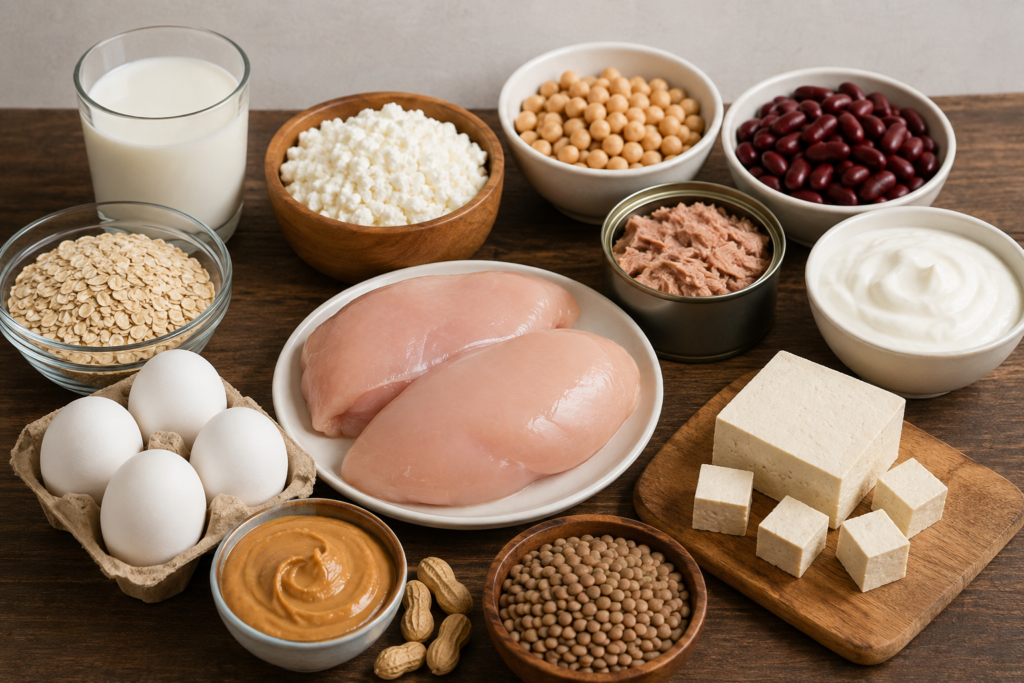
Healthy fats support hormone production, including testosterone, which plays a role in muscle growth.
Affordable healthy fat sources include:
Peanuts
Sunflower seeds
Peanut butter
Olive oil
Egg yolks
These foods also help keep you full throughout the day.
Sample Budget High Protein Meal Plan
Breakfast
Three boiled eggs
Oatmeal made with milk
One banana
Morning Snack
Greek yogurt
Handful of peanuts
Lunch
Grilled chicken breast
Rice
Mixed vegetables
Afternoon Snack
Peanut butter sandwich on whole wheat bread
Dinner
Lentil curry
Brown rice
Fresh salad
Evening Snack
Cottage cheese
This meal plan provides plenty of protein while keeping grocery costs low.
Tips to Save Money While Buying Protein Foods
Buy in bulk whenever possible.
Choose store brands instead of premium labels.
Purchase frozen vegetables.
Cook meals at home instead of ordering takeout.
Prepare meals for several days at once.
Buy seasonal fruits and vegetables.
Compare prices between different grocery stores.
Avoid buying unnecessary supplements if your protein needs are already met through food.
These simple habits can significantly reduce your monthly food expenses.
Should You Buy Protein Powder?
Protein powder can be convenient, but it is not essential.
If you can meet your daily protein requirement through foods like eggs, chicken, milk, lentils, beans, and yogurt, there is no need to spend extra money on supplements.
Protein powder is simply another source of protein. It should never replace a balanced diet.
Common Mistakes People Make
Many beginners believe they need expensive foods to gain muscle.
Some people skip meals because they think eating healthy costs too much.
Others spend hundreds of dollars on supplements while ignoring basic nutrition.
Another mistake is eating plenty of protein but not consuming enough calories overall. Muscle growth requires both protein and sufficient energy.
Finally, many people forget to stay hydrated. Drinking enough water supports muscle recovery and overall performance.
How Much Protein Should You Eat Daily?
Your protein needs depend on your body weight and activity level.
If you weigh 70 kilograms and train regularly, aiming for around 110 to 150 grams of protein per day is a practical target.
Instead of trying to eat all your protein in one meal, spread it across breakfast, lunch, dinner, and snacks.
This approach helps your body use protein more efficiently throughout the day.
Combine Good Nutrition With Strength Training
Eating the high protein foods for muscle gain on a budget is only part of the process.
You also need to challenge your muscles through resistance training.
Focus on exercises such as:
Squats
Push ups
Pull ups
Rows
Bench press
Deadlifts
Overhead press
As your muscles become stronger, gradually increase the weight or repetitions. This principle, known as progressive overload, is one of the most effective ways to build muscle.
Getting seven to nine hours of sleep every night is equally important because muscle recovery mainly happens while you rest.
Final Thoughts
Finding high protein foods for muscle gain on a budget is much easier than many people think. You do not need expensive supplements or luxury meal plans to achieve your fitness goals. Affordable foods like eggs, chicken breast, lentils, beans, milk, Greek yogurt, oats, peanut butter, and canned tuna provide excellent nutrition without putting pressure on your budget.
The key is staying consistent with both your nutrition and your workouts. Eat enough protein every day, train regularly, get quality sleep, and be patient with the process. Small daily habits add up over time, and before you know it, you will start seeing noticeable improvements in your strength, muscle size, and overall health.